
의료 감수: 박석민 한의사 (대표원장)
HELLP syndrome 과 자간전증

HELLP syndrome과 자간전증(pre-eclampsia)의 태반병리 HELLP syndrome 은 Hemolysis, Elevated Liver enzymes, Low Platelet count의 약자 입니다. 임신 20주 이후에 주로 나타나며 자간전증(preeclampsia,
목차
자간전증보다 위중하다는 HELLP 증후군, 태반에서는 무슨 일이 벌어질까요?
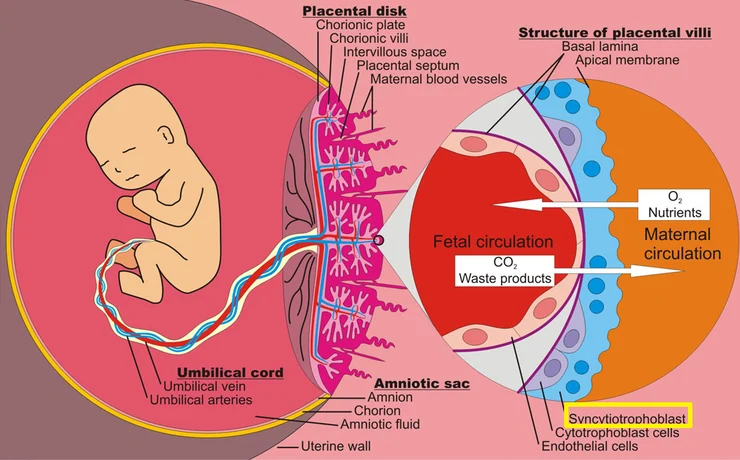
HELLP 증후군은 용혈(Hemolysis)·간효소 상승(Elevated Liver enzymes)·혈소판 감소(Low Platelet count) 세 가지를 한데 묶은 약자로, 임신 20주 이후 자간전증과 겹쳐 나타나는 경향이 있습니다. 태반에서 유리된 여러 물질이 모체 혈관 내피를 손상시키면서 미세혈관 혈전과 용혈, 간·신장 손상으로 이어지는 것이 핵심 기전이며, 대개 자간전증보다 위중하기 때문에 진단되면 임신을 종료하는 것이 원칙으로 알려져 있습니다.
HELLP 증후군과 자간전증, 어떤 증상으로 나타날까
HELLP 증후군은 자간전증(preeclampsia, 임신중독증)의 대표 소견인 고혈압·단백뇨·부종을 함께 보이는 경우가 많습니다. 여기에 피로감, 오심, 구토, 상복부 통증 같은 비교적 모호한 증상이 동반될 수 있어 초기에는 단순 소화기 증상으로 오인되기도 합니다.
검사상으로는 용혈, 간수치 상승, 혈소판 감소라는 객관적 임상소견이 확인됩니다. 상복부 통증은 간의 팽창과 관련될 수 있고, 전신 피로감은 빈혈과 맞물려 나타나는 경향이 있어 단독 증상만으로 판단하기보다 임상 양상과 검사 소견을 함께 살피게 됩니다. 임신을 종료하고 나면 대부분 증상이 사라지는 경과를 보이는 점도 이 증후군의 특징적인 부분입니다.
Tennessee 분류로 보는 HELLP 진단 기준
진단은 흔히 Tennessee classification을 기준으로 삼습니다. 다음 세 축이 핵심입니다.
- 미세혈관병성 용혈성 빈혈(Microangiopathic hemolytic anemia) — 혈청 haptoglobin 저하, LDH 상승 동반
- 간효소 상승 — ASAT(AST) > 70 IU/L, LD > 600 IU/L
- 혈소판 감소 — 혈소판 < 10만
세 가지를 모두 만족하면 완전형(complete) HELLP에 해당하고, 일부만 충족하면 부분형으로 분류해 경과를 더 면밀히 지켜보게 됩니다. 수치 기준이 명확한 만큼 혈액검사가 진단의 중심에 놓이며, 혈소판 수치와 간효소는 시간에 따라 변동할 수 있어 반복 측정으로 추세를 확인하는 것이 도움이 될 수 있습니다. 용혈 여부는 LDH 상승과 haptoglobin 저하를 함께 보는 방식으로 뒷받침됩니다.
태반 단백 PP13과 혈관신생 인자의 이상
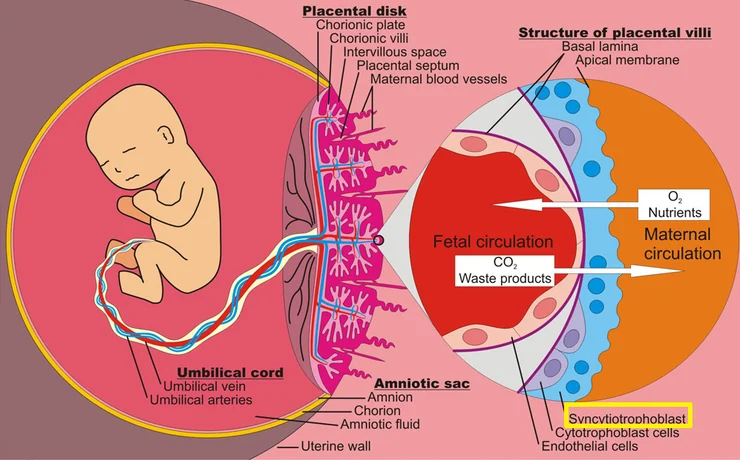
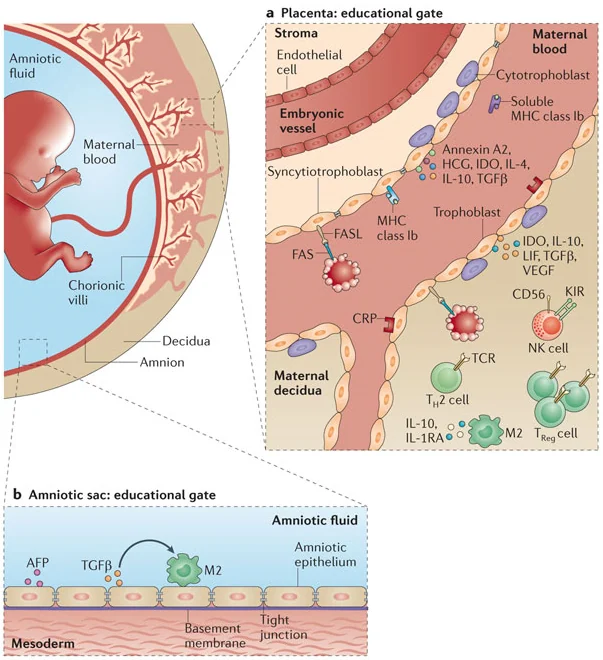
HELLP 증후군과 자간전증을 보이는 산모의 태반에서는 비교적 이른 임신 초반기부터 변화가 시작되는 것으로 알려져 있습니다. 위 그림의 우측 하단에 표시된 합포체영양막(syncytiotrophoblast) 막의 형태학적 이상이 그 출발점이며, 이 세포는 PP13(placental protein 13)이라는 단백질을 합성·분비합니다.
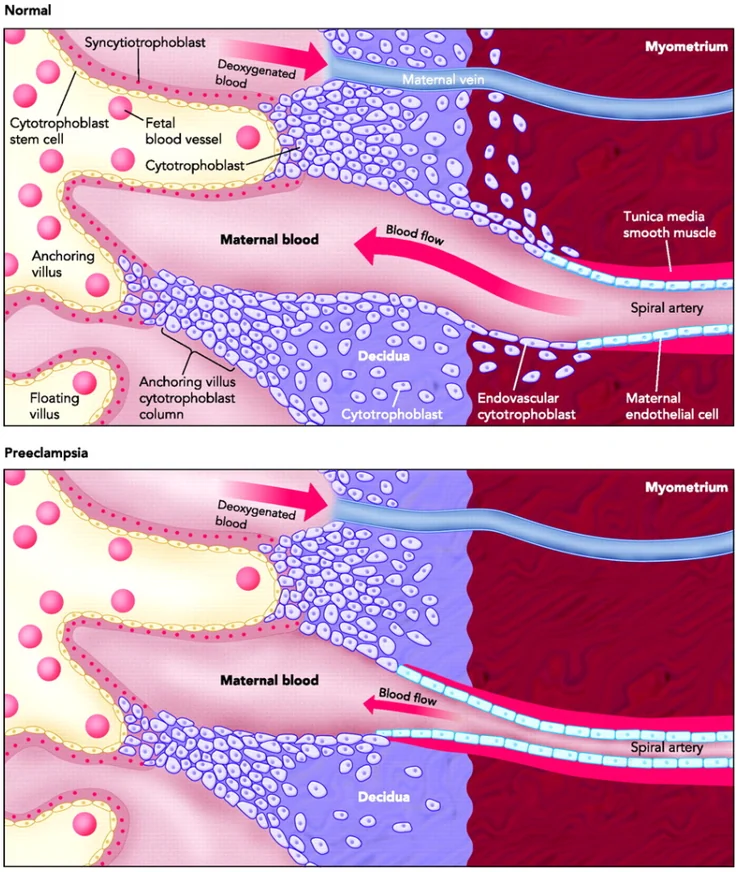
이런 산모에서는 임신 초기부터 태반에서 PP13과 혈관신생 인자(angiogenic factor)가 유리되어 점차 누적됩니다. 이 외에도 PIGF, VEGF, sFlt1, sEndoglin 등이 정상 산모보다 높은 농도로 분비된다는 사실이 보고되어 있습니다. 이 물질들은 동맥성 고혈압과 신사구체 내피증(glomerular endotheliosis)을 유발해 자간전증으로 이어지게 됩니다.
혈전성 미세혈관증과 용혈성 빈혈의 기전
태반 유래 물질로 인한 혈관 내피 손상은 미세혈관 안에서 혈전을 만들어냅니다.
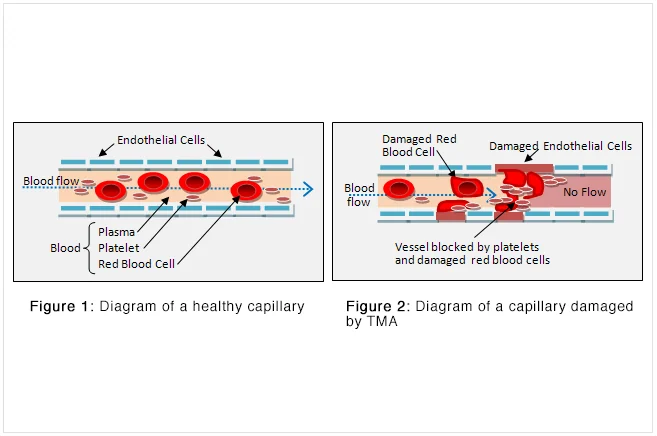
TNF-α 자극으로 미세혈관에 혈전증이 발생하고, 항혈관신생 물질(anti-angiogenic substances)에 의한 내피 손상이 더해집니다. 여기에 높은 농도의 활성 VWF와 TNF-α가 작용하면 혈전성 미세혈관증(Thrombotic microangiopathy)이 유발됩니다. 만약 항인지질항체증후군(APLS)을 동반한 여성에게 광범위한 미세혈관증이 나타난다면 catastrophic APLS로 진단할 수 있습니다.
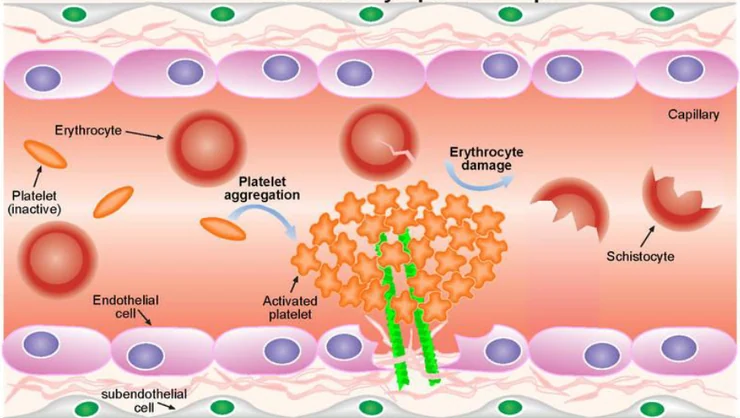
이렇게 형성된 fibrin strands와 손상된 혈관 내피 사이를 적혈구가 지나가다 부서지면 미세혈관병성 용혈성 빈혈(MAHA)이 발생합니다. 깨진 적혈구는 Schistocyte 혹은 burr cell이라고 부르며, 혈액도말에서 이 파편 적혈구가 관찰되는 것이 용혈의 단서가 됩니다.
간·신장 손상은 어떻게 진행되나
간에서는 융모영양막(villous trophoblast)의 placenta-derived FasL이 높은 농도로 관찰됩니다. 이는 TNF-α 생성을 촉진하고, 결과적으로 간세포의 apoptosis와 necrosis로 이어집니다.
간의 sinusoid에서는 fibrin과 leukostasis가 관찰되는데, 이는 앞서 설명한 혈전성 미세혈관증에서 비롯된 것입니다. 도플러 초음파로 확인하면 간문맥 혈류가 크게 저하되어 있는 양상을 볼 수 있습니다. 신장에서는 마찬가지로 혈전성 미세혈관증과 함께 급성 세뇨관 괴사(acute tubular necrosis)가 관찰됩니다.
전체 기전 정리: 한 갈래에서 갈라지는 두 질환
태반에서 유리되는 사이토카인, NKB, sFlt1, sEng, TNF-α, FasL 같은 물질들이 출발점입니다. 이들의 농도는 임신 중·후반기로 갈수록 점차 증가합니다.
- 신사구체 내피증과 고혈압으로 진행하면 → 자간전증
- MAHA, 혈전성 미세혈관증, 간 손상으로 진행하면 → HELLP 증후군
즉 같은 태반 유래 물질이라는 뿌리에서 출발해, 침범하는 표적 장기에 따라 두 가지 임상 양상으로 갈라지는 셈입니다.
인천 송도 이레한의원은 항인지질항체증후군을 비롯한 자가면역질환과 임신 관련 면역 이상을 진료하며, 검사 수치와 병리 기전을 함께 살펴 환자의 상태를 종합적으로 이해하는 데 중점을 둡니다.
⚠️ 본 글은 의학 정보 제공을 목적으로 하며, 정확한 진단·치료는 전문 의료기관에서 받으시기 바랍니다.
자주 묻는 질문
Q. HELLP 증후군은 자간전증과 같은 병인가요?
완전히 같지는 않습니다. 두 질환은 태반에서 유리된 동일한 물질에서 출발하지만, 신사구체 내피증·고혈압 쪽으로 진행하면 자간전증, 용혈·미세혈관 혈전·간손상 쪽으로 진행하면 HELLP 증후군으로 나타나는 경향이 있습니다. 대개 HELLP 쪽이 더 위중하게 여겨집니다.
Q. HELLP 증후군은 어떤 검사로 진단하나요?
혈액검사가 중심입니다. Tennessee 분류에서는 LDH 상승을 동반한 미세혈관병성 용혈성 빈혈, ASAT > 70 IU/L·LD > 600 IU/L 수준의 간효소 상승, 그리고 혈소판 < 10만을 기준으로 삼습니다.
Q. 진단 후에도 증상이 계속되나요?
대부분 임신을 종료하면 증상이 사라지는 경과를 보입니다. 그래서 HELLP 증후군이 확인되면 임신 종료가 중요한 치료 방향으로 고려되며, 이후 회복 과정을 의료진과 함께 관찰하게 됩니다.